

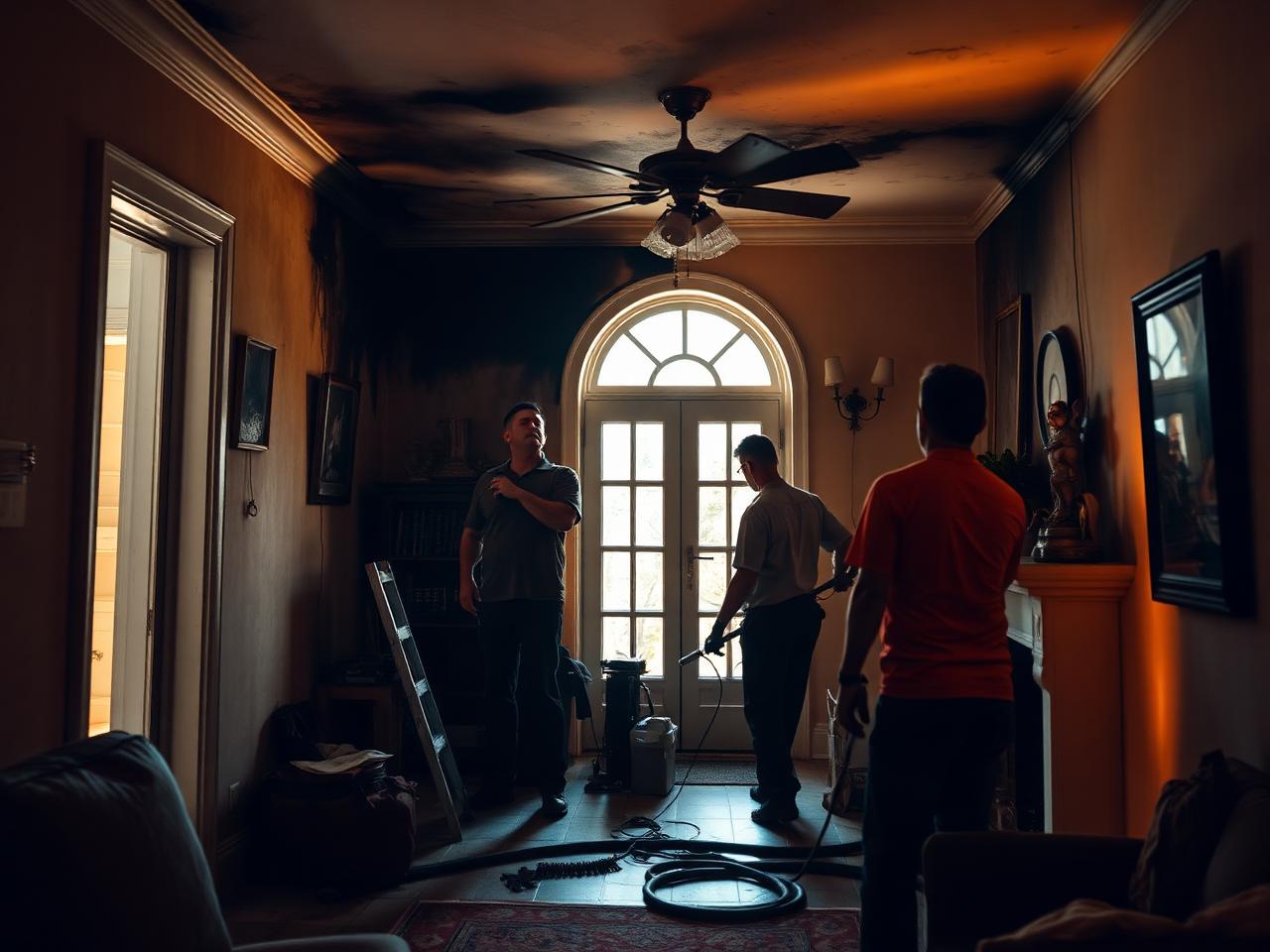
Fire Damage Restoration
Soot, structure, and contents—restored with care.
Fire damage is more than what burns. Smoke residue, soot, and odors penetrate walls, HVAC systems, and contents long after the flames are out. We restore your structure and your belongings with proven cleaning protocols, industrial deodorization, and a single accountable team from board-up to final paint.
What fire actually does to a home
Flames cause the obvious damage—charred framing, burned finishes, melted plastics. But the bigger restoration challenge is everything the fire left behind: acidic soot that etches glass and corrodes metal within hours, smoke residue that bonds to porous surfaces, water from suppression efforts that soaks into structure, and odors that persist long after surfaces look clean. A complete restoration addresses all four.
Understanding smoke and soot types
Different fires leave different residues, and each requires a specific cleaning approach. Wet smoke (low-heat, smoldering fires) leaves sticky, smeary residue that's difficult to remove and has a strong pungent odor. Dry smoke (fast-burning, high-temperature fires) leaves powdery residue that's easier to clean but penetrates deeper into porous materials. Protein residue (kitchen fires) is nearly invisible but leaves an extreme odor and discolors paint and varnish. We identify the residue type before cleaning begins.
Contents pack-out and restoration
Furniture, electronics, clothing, photos, heirlooms—your belongings carry the same soot and odor as the structure. We carefully inventory and photograph every item, pack-out salvageable contents to our climate-controlled facility, and use specialty cleaning techniques (ultrasonic baths, ozone chambers, dry-ice blasting, document freeze-drying) matched to each material. Items that cannot be restored are documented for your insurance claim.
Eliminating odor at the source
Masking odors with deodorizers is not restoration. We remove odor-bearing residues at the source, decontaminate HVAC ductwork, seal porous structural materials when needed, and finish with hydroxyl or ozone treatment to neutralize remaining odor molecules. We test air quality before sign-off—if you can smell it, we're not done.
What's included
- Emergency board-up and roof tarping
- Soot, ash, and char removal
- Structural cleaning and stabilization
- Contents pack-out, cleaning, and storage
- HVAC and air duct decontamination
- Full reconstruction and rebuild
Common causes
- Cooking fires (the #1 cause of residential fires)
- Heating equipment and space heaters
- Electrical wiring and overloaded circuits
- Candles, smoking materials, and unattended flames
- Dryer lint buildup
- Wildfire ember intrusion
What to do right now
- 1.Do not enter the structure until the fire department clears it
- 2.Do not touch or wipe sooty surfaces—you can drive residue deeper
- 3.Do not run HVAC systems—soot will spread through every room
- 4.Photograph everything before you move anything
- 5.Call (360) 228-2220 for 24/7 emergency board-up and damage assessment
Our certifications
- IICRC FSRT (Fire & Smoke Restoration Technician)
- IICRC OCT (Odor Control Technician)
- IICRC WRT (Water Damage from suppression)
Our process
Secure the Property
Emergency board-up, roof tarping, and safety stabilization within hours of dispatch.
Damage Assessment
Detailed scope for structure, contents, HVAC, and electrical systems.
Cleaning & Deodorization
Multi-stage soot removal, contents pack-out, and ozone/hydroxyl odor neutralization.
Reconstruction
In-house rebuild to pre-loss condition or better—one team start to finish.
Frequently asked questions
- Can my belongings be saved after a fire?
- Often yes. We pack out salvageable items, clean and deodorize them in our facility, and store them until your home is ready. Soft goods, electronics, documents, photos, and even some smoke-damaged furniture can usually be restored. We document items that cannot be saved for your claim.
- How do you remove smoke odor for good?
- We combine source removal (eliminating soot-bearing materials and residues), surface cleaning, HVAC decontamination, sealing of porous substrates when needed, and ozone or hydroxyl treatment to neutralize odor at the molecular level. Masking sprays alone don't work—the odor will return.
- Do I need to find a separate contractor for the rebuild?
- No. Our in-house construction crew handles framing, drywall, flooring, paint, cabinetry, and finishes. One contract, one project manager, one accountable team from emergency board-up to your final walkthrough.
- How long does fire restoration take?
- A small kitchen fire might be complete in 2–3 weeks. A whole-home loss with significant structural damage can take 4–8 months. We provide a written timeline after initial assessment and update you weekly.
- Will my insurance cover this?
- Standard homeowner's policies cover sudden, accidental fire damage including smoke, soot, and water damage from firefighting. We document everything, work directly with your adjuster, and bill your carrier. We'll flag any coverage concerns up front.
Disaster doesn't wait. Neither do we.
Every minute matters. Call now for immediate dispatch across Kitsap County and the Greater Puget Sound.
Call (360) 228-2220 — We Answer 24/7